Introduction to Glasgow Water Main Break Shettleston Road
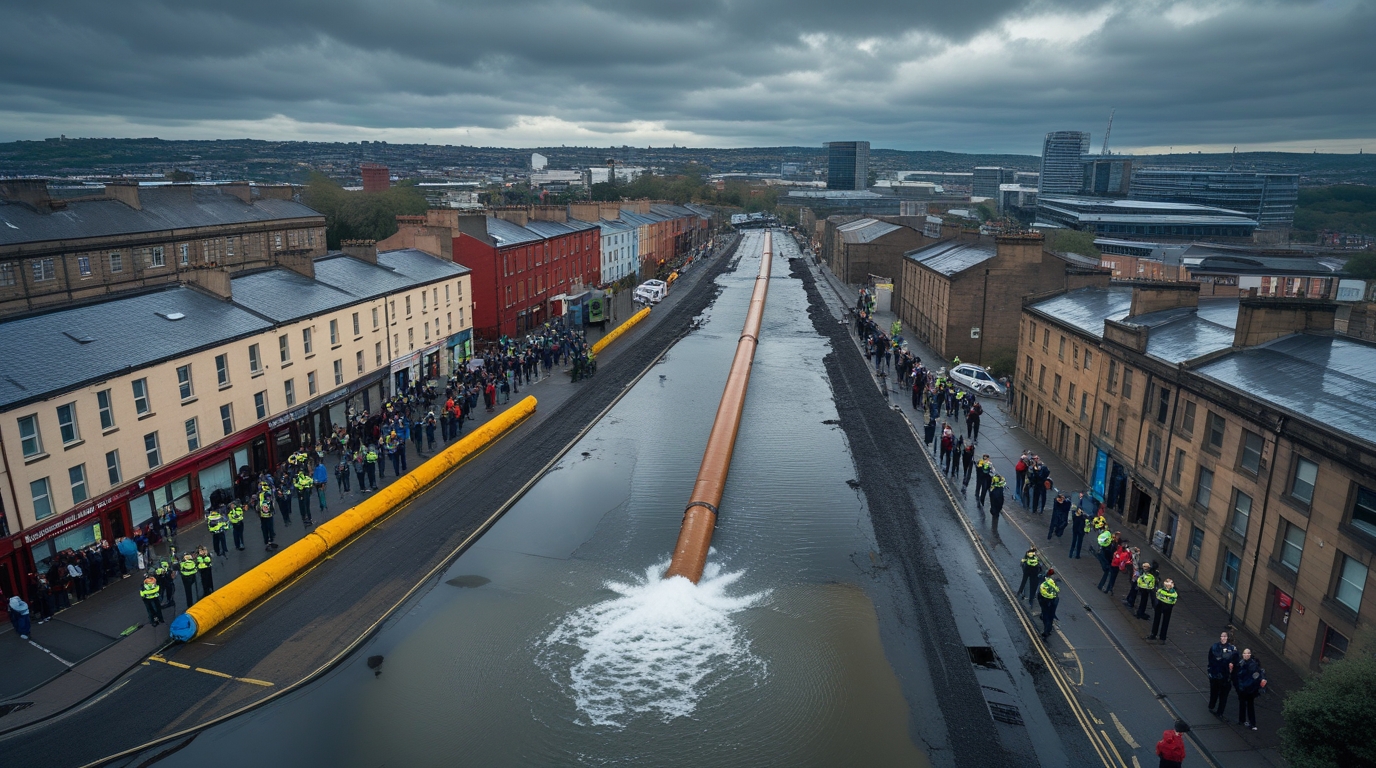
On a quiet morning in late May 2025, a major underground water main ruptured beneath Shettleston Road in Glasgow Water Main Break Shettleston Road East End, triggering a cascade of chaos for residents, commuters, and local businesses alike. What started as a loud crack underfoot turned within minutes into torrents of water gushing up from cracks in the road — flooding pavements, inundating lanes, and forcing the closure of a key artery that many depend on daily.
The rupture occurred near the junction with St Mark Street, affecting a stretch between Old Shettleston Road and Fernan Street, and extending toward Westmuir Street and Hart Street. The event didn’t merely douse the surface; it disrupted water supply to hundreds of homes in postcode zone G32, knocked out pressure for many more, and displaced normal traffic flows — as buses were rerouted and drivers scrambled for alternate routes.
The initial shock quickly gave way to an unfolding community crisis: households without water for basic needs, local shops and cafés shutting down temporarily, absurd traffic diversions, and vulnerable residents — the elderly, families with young children — struggling most to cope. In an instant, a hidden piece of infrastructure failure transformed into a public-health, economic, and mobility emergency.
Why Did the Main Burst? Unseen Strain Beneath the Streets
Beneath the surface, a combination of aging infrastructure and external pressures made the main vulnerable. Many of Glasgow Water Main Break Shettleston Road older pipelines — including the one under Shettleston Road — date back decades. Over time, corrosion, metal fatigue and ground-movement stress cracks in pipes. Heavy traffic above, vibrations from buses and delivery trucks, shifting soil, and seasonal ground settling can all exacerbate weak points.
Hydraulic dynamics inside the network can also play a role: a sudden pressure surge (for example, when valves shift or demand spikes) can create a “water hammer” effect — a wave of force strong enough to snap brittle, old pipes. In the case of Shettleston Road, experts point to a combination of these factors — age, stress, traffic load, and internal pressure fluctuations — as the likely causes for the rupture.
What looked like a random failure was in fact the culmination of long-standing wear and structural vulnerability. As has been the case with several other parts of Glasgow Water Main Break Shettleston Road network, decades-old mains are under greater and greater risk — especially when maintenance and replacement lags behind.
Immediate Fallout: Daily Life Disrupted
Households Thrown Off-Balance
As taps ran dry or sputtered discolored water, families suddenly had no access to what many take for granted. Cooking, cleaning, bathing, even flushing toilets became complicated or impossible. For vulnerable individuals — seniors, people needing medical care, parents with infants — the disruption wasn’t just inconvenient, it was stressful and possibly risky. Showering, hygiene, basic sanitation all took a hit.


Some households that did receive water reported low pressure or contaminated water: brown or rusty, due to sediments disturbed in the pipes; or cloudy, due to trapped air — neither of which was safe for drinking or cooking until flushed properly. Many rushed to buy bottled water, fill containers, or depend on neighbours for basic supply.
Local Businesses Suffered Too
The economic blow was immediate. Cafés, takeaways, laundromats, hair-salons and other water-dependent establishments along Shettleston Road were forced to shut temporarily or limit services drastically. Without water, kitchens couldn’t operate, washing services halted, and hygiene-sensitive services closed entirely. For small businesses, one day of closure meant lost income — sometimes substantial.
Even shops not directly relying on water saw plummeting foot traffic: with the road closed and traffic diverted, potential customers stayed away. For many local merchants, the break translated into a loss of trade and a hit to customer confidence.
Transport Gridlock and Public-Transit Chaos
Shettleston Road is one of Glasgow Water Main Break Shettleston Road major commuter and transport arteries — and with it closed, the ripple effect was massive. Bus routes were diverted, schedules disrupted, and many commuters found themselves stranded or delayed for hours. Drivers, forced onto smaller side-streets like Westmuir Street or via alternate routes, faced heavy congestion and long detours.
Travel times doubled or even tripled for some. Morning and evening rush hours turned into chaos. Pedestrians and cyclists also had trouble — disabled access, flooded pavements, and blocked sidewalks made movement dangerous or difficult. The city suddenly confronted how dependent daily mobility is on invisible infrastructure.
The Response: Rapid Reaction, Repair, and Communication
Within hours, teams from Scottish Water mobilised to isolate the damaged main, closing valves to stop further flooding and prevent water loss. Safety crews cordoned off the affected area, blocking access to the flooded stretch and redirecting traffic. Emergency signage went up, and residents were urged to avoid the zone while repairs got underway.
Repair crews excavated the broken section of pipe — a fractured cast-iron main roughly a metre or more long — and replaced it with modern polyethylene (PE) fittings. Once replaced, pressure testing and disinfection followed. Gradual reintroduction of water flow was carefully monitored. Residents were warned that discoloured or air-filled water might appear initially; advice was given to flush cold water taps until it ran clear, usually within 24–48 hours.
Parallel to physical repairs, communication efforts were important. Local radio, community forums, and official channels kept neighbourhoods informed. A bottled-water distribution point was set up near the community centre for those in need, especially vulnerable households. For some elderly or medically dependent residents, priority support was arranged.
In roughly 24–36 hours, the broken pipe was replaced, water restored, and roads reopened. While clean water returned and floods drained, the event left visible scars: road damage, disturbed pavements, and renewed unease about the integrity of Glasgow Water Main Break Shettleston Road buried infrastructure.
Long-Term Lessons: Infrastructure Pressure, Community Awareness
The Glasgow Water Main Break Shettleston Road was more than a one-time event — it exposed systemic vulnerability that affects many older cities. It highlighted the risks inherent in aging networks: decades-old pipes, built under different standards, now carrying modern load and pressure they were never designed for.
For the city, the lesson is urgent: maintenance, monitoring, and periodic replacement of old mains cannot be postponed. Regular inspections, use of modern, flexible materials, pressure-management systems, and proactive replacement schedules are essential to avoid similar disasters.
At the community level, it reminded residents how vital water infrastructure is — and how fragile it can be. What seems like an invisible service is actually a lifeline; when it fails, households, businesses, mobility, and public health all suffer. It underscored the need for preparedness: homes having stored water for emergencies, local networks for mutual support, and clear communication channels between authorities and citizens.
The Human Factor: Resilience, Frustration, and Calls for Change
Amid the chaos, stories of resilience and community solidarity emerged. Neighbours helped each other with bottled water, shared basic supplies, checked on elderly or vulnerable residents, and offered support where they could. Local businesses, though hit, tried to remain afloat — some offered takeaway-only services, some reopened quickly once water returned. The disruption was real, but so was collective effort to cope.
At the same time, frustration ran high. Many questioned how a major urban artery could be running on such fragile infrastructure. Residents demanded transparency, better maintenance, and faster upgrades. Some called for more funding into water-network overhaul, pressure-monitoring sensors, or even city-wide audits of mains.
For some, the incident was a wake-up call. They started advocating for more robust public-works policies, better communication from authorities in crises, and greater accountability for infrastructure upkeep. The Shettleston Road break wasn’t just a glitch — it became a symbol of a bigger problem.

What Needs to Change to Prevent the Next Break
To prevent future disasters similar to Shettleston Road, several measures are essential:
- Systematic replacement of old mains, especially cast-iron pipes that have exceeded lifespan.
- Upgrading to modern, flexible pipe materials (like PE), better suited for current traffic loads and pressure conditions.
- Installation of pressure-monitoring sensors in critical zones to detect surges or leaks before they escalate.
- Regular inspection cycles and maintenance plans to catch deterioration early.
- Community awareness programs about what to do in case of supply disruption — storing water, reporting leaks, following official advisories.
- Emergency response protocols prioritising vulnerable populations: elderly, children, medically dependent residents.
If authorities, water companies, and city planners act on these lessons, Glasgow can reduce the risk of repeat events. But without sustained investment and commitment, the vulnerabilities will remain.
Conclusion on Glasgow Water Main Break Shettleston Road
The Shettleston Road water-main break was a dramatic, disruptive event — but not just a freak accident. It exposed structural weaknesses hidden beneath Glasgow Water Main Break Shettleston Road streets and revealed how deeply modern urban life relies on infrastructure we barely think about.
For residents of Glasgow Water Main Break Shettleston Road and the wider G32 community, the break meant lost water, business disruption, commuting chaos, and real stress. But it also sparked solidarity, community support, and renewed demands for change. For city planners and water authorities, it served as a harsh reminder: old pipes don’t stay hidden underground forever — eventually, they fail, and when they do, the consequences ripple across daily life.
In that rupture, Glasgow Water Main Break Shettleston Road learned a costly lesson about neglect, urgency, and the need for sustainable infrastructure. The road — once flooded with water — may now be repaired. But until each weakened main is replaced and properly maintained, every crank of a tap in a quiet home or every bus crossing Shettleston Road carries a silent risk.